In Ponce Inlet, a 1983 Vote Still Sets What Your Condo Is Worth
October 1, 2026
October 1, 2026
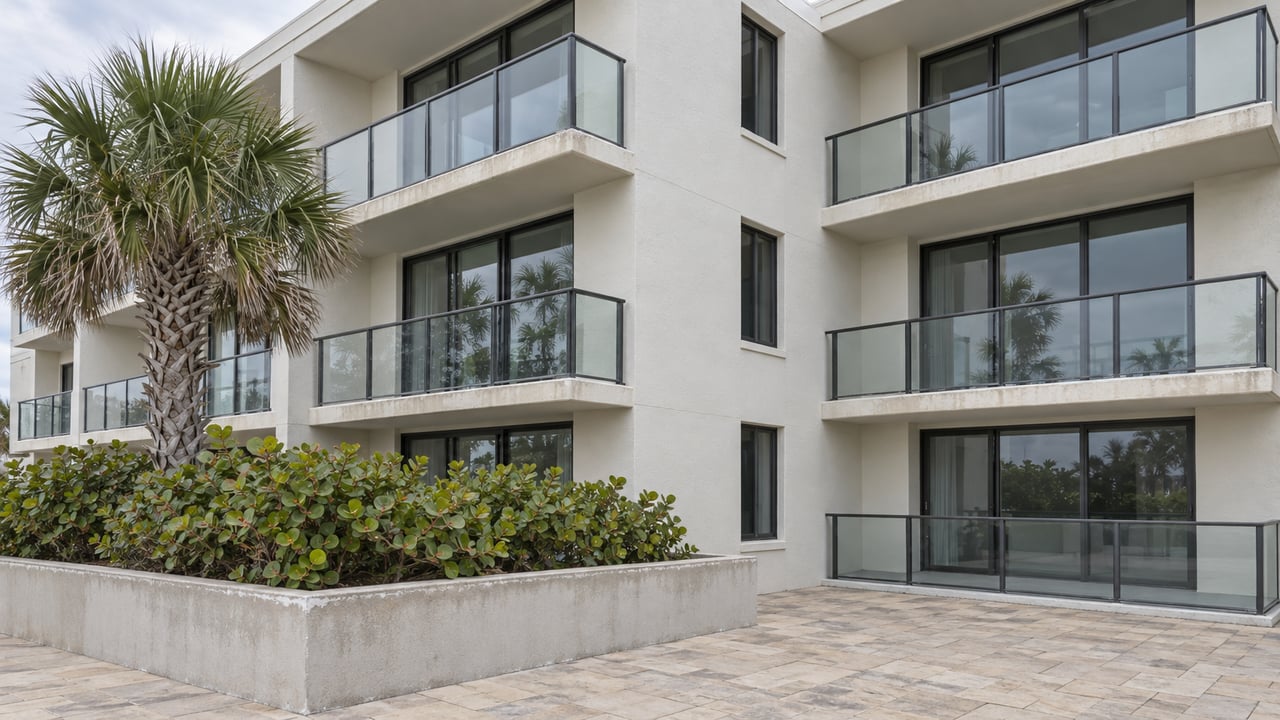
Drive down S. Peninsula Drive in Ponce Inlet and the skyline does something odd for a Florida beach town. A handful of buildings rise seven, eight, even more stories above the sand. Everything else around them tops out at roughly three stories, no matter how new the construction or how close to the water. A buyer touring both in the same afternoon usually assumes the difference comes down to amenities, age, or how much a developer was willing to spend. It doesn't. It comes down to a single ballot question voters in Ponce Inlet answered in November 1983.
In 1983 the Town Council put a charter amendment in front of Ponce Inlet voters that would cap every building in town at 35 feet. It passed. The language that went into the charter left no room for interpretation: "Buildings within the Town of Ponce Inlet shall be limited to a maximum height of thirty-five (35) feet." No carve-outs, no exceptions, nothing tied to lot size or zoning district.
Two ordinances over the next two years defined how that cap would apply to properties already zoned for taller buildings.
That short sequence of ordinances is the entire explanation for why a few Ponce Inlet buildings look like they belong in Daytona Beach Shores while the rest of the town reads like a low, quiet beach village. The tall buildings sit on parcels that happened to carry T-1 or PUD zoning on one specific date in 1983. Every other parcel in town, including land that has changed hands, been rebuilt, or been redeveloped many times since, is bound by the original 35-foot charter limit.
This isn't a rule that sits quietly in a code book nobody reads. It got tested in federal court. In Bochese v. Town of Ponce Inlet, decided by the 11th Circuit in 2005, a property owner sued after the Town rescinded a development agreement for an oceanfront condominium project on land later added to a planned unit development. Florida's circuit court had already ruled on the underlying zoning question, treating the town charter as something closer to a local constitution: binding on the Town itself, not just on private landowners, and controlling even over agreements the Town had already signed. The court concluded that construction on the disputed property remained subject to the 35-foot limit regardless of what any development agreement said.
The appellate decision that followed turned on standing, not height policy, but the underlying zoning history it lays out is exactly what a buyer needs to understand today. The 35-foot rule isn't a soft guideline a determined developer can negotiate around case by case. It's a charter provision the Town has defended in court, and the only path around it was permanently closed on November 8, 1983.
You can still find the height-limit language doing work in the town's current zoning code, which addresses what happens when a legal nonconforming structure over 35 feet needs to be rebuilt after storm damage or flood-elevation requirements. The exception created four decades ago is still the operative rule for the small number of buildings it covers.
If you've started comparing Ponce Inlet listings, you've probably noticed how wide the range runs. As of April 2026, condos in town were priced from roughly $289,990 up to $1,170,000, with a townwide median home price near $650,000. It's tempting to read that spread the way you'd read it anywhere else: bigger unit, better finishes, more recent renovation, higher number.
Some of that is true here too. But a meaningful share of the gap between the low $300,000s and the seven-figure end tracks something a spec sheet won't show you: whether the building sits on one of the handful of parcels grandfathered into the 70-foot allowance, or whether it's bound to the 35-foot cap like almost everything else in Ponce Inlet. A seven-story oceanfront tower like The Towers or Tidewater, or a gated PUD community like Harbour Village Golf and Yacht Club, can offer floor plans, sightlines, and unit counts per building that a 35-foot structure simply cannot replicate, not because nobody has tried, but because nobody legally can. That scarcity doesn't reset when the market softens. It's fixed by ordinance, not by demand.
Compare that to the citywide figures a portal search will hand you. Redfin's December 2025 data put Ponce Inlet's median sale price at $403,000, down 13.8% from a year earlier, with homes averaging around 133 days on the market that month. That single median blends both categories together, the grandfathered towers and the 35-foot majority, into one number. In a town where every building competed under identical height rules, a citywide median would tell you something coherent about the whole market moving together. In Ponce Inlet, it's averaging two markets that can never converge, because one of them has a supply ceiling the other one doesn't.
If you're comparing two Ponce Inlet buildings on price per square foot, the height-cap history is worth checking before the comparison means anything. A few practical ways to do that:
Ask when the building was originally permitted and whether its zoning file shows T-1 or PUD status predating November 8, 1983. A title company or the town's planning and zoning division can confirm this from the parcel's zoning history, and it's a faster answer than trying to read the ordinance chain yourself.
Use story count as a rough field signal. A building at three stories or fewer is almost certainly operating under the standard 35-foot cap. Anything taller is very likely one of the parcels grandfathered under Ordinance 84-11, and that status can't be recreated on a different lot today no matter what a developer proposes.
Weigh what that means for the long run, not just the current listing price. A grandfathered tower's height entitlement doesn't expire and can't be issued to a new site, so its scarcity value tends to hold even when the broader market cools, the way it did through the second half of 2025. A 35-foot property's value still depends on the same factors that drive any low-rise coastal home: lot, view, condition, and how the rest of the market is moving that quarter.
None of this makes one category the better buy. It just means the two are answering different questions, and a single median or a single price-per-square-foot number can't tell you which one you're looking at.
Ponce Inlet still reads as a low, uncrowded stretch of coastline compared to the towers just north in Daytona Beach Shores, and that's largely because voters in 1983 decided it should. The exceptions carved out the following year were narrow enough that the town's character mostly held. Whatever building you're touring, the height above your head is the result of a specific date on a specific ordinance, not a coincidence of when the developer happened to break ground.
If you're weighing a Ponce Inlet condo against another and the price gap doesn't line up with what you're seeing in person, that gap is worth understanding before it's worth negotiating. Contact Allyson Wise-Bird to walk through a specific building's zoning history before you write an offer in Ponce Inlet.
Stay up to date on the latest real estate trends.


Work with someone who listens, communicates clearly, and is truly invested in helping you move forward with confidence.